
How does multidisciplinary assessment impact outcomes in Stage II to III non-small cell lung cancer (NSCLC)?
Impact on Survival
Across Stage II to III NSCLC, up-front MDT planning is associated with a twofold improvement in overall survival rates at 5 years1
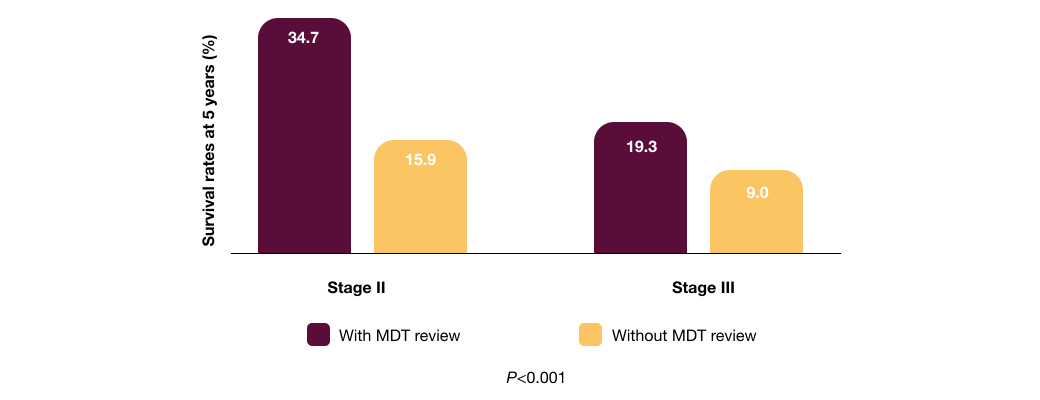
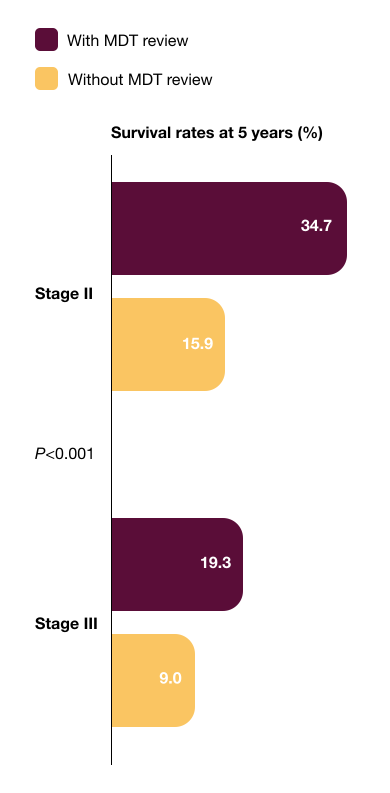
Without up-front MDT review, fewer than 1 in 5 patients with Stage II to III NSCLC survived beyond 5 years1
Study design: The results are based on a retrospective investigation of all lung cancer cases diagnosed between 2002 and 2016 entered into the Stony Brook University Hospital cancer registry. Patients were divided into 2 groups: 1956 lung cancer patients who had a minimum of 1 clinical encounter with MDT physicians and case presentation at the tumor board and 2315 lung cancer patients who did not. Differences between the 2 groups were determined using X2 tests for categorical data and t tests for continuous data. Log-rank tests were used to evaluate differences in the 5-year survival outcomes between MDT and non-MDT patients, stratified by tumor stage. Cox proportional hazard models were used to provide estimates of factor effects on survival, with adjustment for possible confounders.1
NCCN Guidance on MDT Evaluation
NCCN Clinical Practice Guidelines in Oncology (NCCN Guidelines®) emphasize the importance of a collaborative approach to patient selection
For patients for whom more than 1 treatment modality (surgery, RT, or systemic therapy) is usually
considered, an MDT evaluation should be performed prior to treatment and should include a thoracic
surgeon and a radiation oncologist who have major parts of their practices dedicated to thoracic oncology2
NCCN Guidelines® for NSCLC V.7.2026
The full multidisciplinary
team should include1,3:
- Medical oncologist
- Thoracic surgeon
- Radiation oncologist
- Pathologist
- Pulmonologist
- Other healthcare professionals


Optimizing CRT in Unresectable Stage III NSCLC
Watch the lung cancer MDT at AdventHealth discuss diagnosis and staging for optimal NSCLC care.
Featuring: Dr Fortune Alabi, Pulmonologist; Dr Chung-Che (Jeff) Chang, Molecular Pathologist; Dr Charles (Wes) Hodge, Radiation Oncologist; Dr Tarek Mekhail, Medical Oncologist; Dr Mark Socinski, Medical Oncologist Brenda Rzeszutko, Nurse Navigator
Narrator:
Optimizing CRT in Unresectable Stage III NSCLC.
Narrator:
The views and opinions expressed in this video are those of the individual oncology specialists and do not represent the views or opinions of AstraZeneca. This video contains anecdotal information gathered from a discussion with oncology specialists based on their opinions/experiences. Recommendations are general and may vary with patients. At the time of this filming, the Healthcare Professionals featured were in the roles and at the institutions indicated.
Narrator:
The topics discussed in this video include the multidisciplinary team, determining radiation therapy, and preparing patients for CRT.
Dr Subramanian:
Hello, I’m Janakiraman Subramanian. I’m a medical oncologist. In this video, we’ll be talking about optimizing the use of chemoradiotherapy in unresectable Stage III non-small cell lung cancer. To help with that discussion, I’m joined by 2 thoracic oncology experts.
Dr Chun:
I’m Stephen Chun. I’m a radiation oncologist.
NN Roy:
Hi, and I’m Megan Roy. I’m an oncology nurse navigator.
Narrator:
Here is the first topic, the multidisciplinary team.
Dr Subramanian:
Once the multidisciplinary team has determined that the patient has been diagnosed and staged appropriately and meets the eligibility criteria for concurrent chemoradiation, it is the role of the medical oncologist and the radiation oncologist to develop the comprehensive plan.
Dr Subramanian:
The multidisciplinary setting is key to have those discussions rather than, as a medical oncologist, me independently making the decision. Having the input from you as a radiation oncologist, the nurse navigator who can give the background on this patient can really inform us on choosing the right treatment option for these patients.
Dr Chun:
Stage III disease is pretty heterogeneous, and each of the specialists on the team are critical for making the proper assessments that ensure appropriate treatment decisions.
Narrator:
Members of the MDT include medical oncologists, radiation oncologists, pulmonologists, pathologists, thoracic surgeons, and oncology nurses.
Dr Subramanian:
The nurse navigators, I think, are really at the center of a multidisciplinary team. They are the heart and the brain because they connect between all the other team members and communicate between them as well as with the patients. And so, they are absolutely indispensable, I think, for the MDT.
Dr Subramanian:
Now, Megan, as a nurse navigator, what is your role when these patients are newly diagnosed with non-small cell lung cancer, particularly Stage III unresectable disease?
NN Roy:
So, nurse navigation will help bring the patient’s point of view to that tumor board since they can’t be there, and let you know if they’re going to have transportation issues or are we going to have any other disparities of care, and be able to discuss what resources are going to be needed to help get that patient through that treatment.
Narrator:
Our next topic is determining radiation therapy.
Dr Subramanian:
As a medical oncologist, in some ways, the actual treatment planning is somewhat straightforward for me, particularly when giving it concurrent with the radiation, and that is primarily a platinum-based chemotherapy regimen is what we are choosing. But at the same time, we had to be careful in the sense whether the patient can tolerate that particular chemotherapy, and there are choices of chemotherapy regimens that we have to choose from, whether cisplatin or carboplatin-based regimens would be more appropriate is a decision that we have to make. Similarly, depending on the tumor histology, we may have to choose different types of chemotherapy treatment for those patients.
Dr Subramanian:
Now, from the radiation standpoint, how do you determine a patient is eligible for treatment?
Dr Chun:
So, I think when we look at the history of radiation for locally advanced non-small cell lung cancer, we used to think that only young patients with good performance status were candidates for chemoradiation. But with decades of research dating back to even the late 1990s, what we’ve seen is that even elderly patients with somewhat marginal performance status also benefit from chemoradiation. We should remember that the chemoradiation trials that are done today allow patients usually with a performance status up to 2, and that’s using the ECOG or Zubrod performance status system.
Dr Chun:
It’s also important to remember exactly what a performance status of 2 means. This isn’t just eyeballing a patient and kind of making a subjective judgment. It means someone able to care for oneself and up for more than 50% of waking hours. And so, again, I really urge people out there, don’t discriminate on the basis of something like age or disability. Really look at the definitions and be as objective as you can about what is the true performance status of this patient.
Dr Subramanian:
Now, Stephen, how do you prepare your patients particularly with radiation treatment that they have to be coming in every day and some of the later toxicities that you deal with?
Dr Chun:
When planning radiation therapy, whether it’s the National Comprehensive Cancer Network® (NCCN®) or the NCCN Clinical Practice Guidelines in Oncology (NCCN Guidelines®), the American Society of Radiation Oncology Guidelines, American Radium Society Appropriate Use Guidelines, whatever nationally validated guidelines you would be using, these are very important guidelines that serve as foundations to deliver safe and effective radiation plans for what we now recognize as often curable patients.
Dr Chun:
I am part of the process of planning radiation as a radiation oncologist. So I’m kind of the quarterback of the radiation planning team. This is a multi-step process that involves a number of different elements, including the radiation therapists, the radiation physicists, radiation nurses, and we develop plans based upon imaging, contouring both tumor and normal structures, and prescribing appropriate radiation doses for a specific patient.
Dr Chun:
Most patients these days are treated with advanced radiation techniques, specifically intensity-modulated radiotherapy, also known as IMRT. IMRT very carefully sculpts and molds to convex and concave shapes, whereas 3D conformal therapy, which is directed in straight lines at tumors, has less of an ability to shape to the often abnormal shapes of tumors. And this allows us with IMRT to treat tumors better, but also to spare normal tissues like the heart and the lungs from excess doses of radiation.
Dr Chun:
I almost exclusively use intensity-modulated radiotherapy for locally advanced lung cancer because of increasing evidence of the benefits of using intensity-modulated radiotherapy that reduces likelihood of pneumonitis or inflammation of the lungs. It also reduces cardiac exposure. And so, in the age of chemoradiation followed by appropriate therapies techniques like IMRT are of heightened importance in my opinion.
Narrator:
Our final topic is preparing patients for CRT.
Dr Subramanian:
Megan, how do you help prepare these patients for their upcoming concurrent chemoradiation treatment?
NN Roy:
I educate them about the type of lung cancer. I make sure they understand all their different treatment options. I let them know what to expect and how long and what is going to be required of them to make it through the whole treatment to keep them prepared as best as possible. I am constantly reinforcing the information they’re given, and I want to make sure they understand each step of the process.
NN Roy:
Once the patient agrees to getting chemoradiation, there’s a lot of different steps included. They have to get through their simulation and then they have to wait for that planning session to be done. So they’re calling me, “When am I going to hear? When am I going to hear?” So, it’s constantly re-educating and keeping in touch with the schedulers and making sure everything aligns right. And making sure they have my phone number because sometimes, depending on what institution you are in, it might be the only person that’s answering live and not getting a voicemail. So it’s really important for us to develop that relationship so they know they can call at any time.
NN Roy:
But another thing that’s really hard for patients is getting to the institution every day. It’s a long process. It’s six to seven weeks of daily radiation and once-a-week chemo most of the time. So it’s a lot for a patient who can’t communicate or needs to get a ride or lives two hours away and they might need lodging. So, getting a social worker involved early is really an important part so they can help start setting up those resources that are going to be needed. Getting that nutritionist involved early, and making sure that they know their calories and what they need to do to maintain their weight to get them through treatment is important also.
Dr Chun:
The radiation nurse, I agree, it is so important in helping me with the patient during and after treatment, including with the expected adverse events, particularly esophagitis that they might experience. But we also really rely on the nurse navigator to bridge the gaps in communication and help coordinate patients throughout this process.
Dr Chun:
What I think is really important is to try to put oneself in the mindset of a patient with locally advanced lung cancer. This is probably the most stressful situation they have ever been in in their entire lives. It is so important to explain things in simple ways.
Narrator:
In summary, in a Stage III NSCLC setting, effective multidisciplinary care can help ensure appropriate treatment decisions, which is particularly important given the heterogeneity of Stage III disease. It’s also important to be objective about performance status and which patients will be able to tolerate CRT. IMRT may further optimize treatment and reduce toxicities. Nurse navigators can help guide patients to complete their full treatment journey.
Dr Subramanian:
In closing, you can see that there is a lot of planning and preparation needed by all of us, along with our patients as well as their caregivers, to ensure that we can start concurrent chemoradiotherapy and ensure that it is optimally delivered for our patients. Be sure to look for other videos in the series. Thanks for watching.
Narrator:
There are additional resources on AZinearlylung.com that can help with patient management. These include the Patient Intake Form, the MDT Guide for Optimizing CRT, and the Nurse Guide for Week-by-Week AE Management during CRT.
5 Reasons for Using a Perioperative IO-based Regimen
Dr Sepesi:
Welcome to Beyond the Blade. I’m Dr Boris Sepesi. I’m a thoracic surgeon at Sarah Cannon Cancer Network, HCA HealthONE in Englewood, CO.
Dr Sepesi:
Perioperative IO-based regimens with neoadjuvant IO plus chemotherapy before surgery and adjuvant IO after surgery have recently been approved for use or are being studied in early-stage non-small cell lung cancer.
Dr Sepesi:
It is important for all community thoracic surgeons to know about these regimens and what we are going to discuss today are reasons for the use of these perioperative IO-based regimens.
Dr Sepesi:
To discuss this, we have gathered academic and community surgeons with diverse surgical backgrounds and experiences with IO plus chemo before and IO alone after surgery.
Dr Khandhar:
I’m Sandeep Khandhar. I’m a thoracic surgeon at the Virginia Cancer Specialist Practice in Northern Virginia.
Dr Okusanya:
I’m Olugbenga Okusanya. I’m a thoracic surgeon at Thomas Jefferson Health.
Dr Sepesi:
There are known risks with a perioperative regimen from the potential for surgical delays, patient attrition, complications from the systemic treatment, etc.
Dr Sepesi:
In my practice, I really try to communicate with medical oncologists, and we also utilize nurse navigators to really follow these patients even while they’re getting their neoadjuvant therapy to make sure that they are going through the process safely, to really learn about how they’re tolerating the regimen as we plan the operations.
Dr Okusanya:
I think it’s really important for thoracic surgeons to know this because I personally remember seeing a patient with an early-stage lung cancer who was going to be a candidate for these strategies that could help her in her pathway. And I think it’s really important for all surgeons, all community surgeons, academic surgeons to be able to have these options to present to their patients.
Dr Sepesi:
Here’s our list of our reasons for using perioperative IO-based regimens. Dr Okusanya, please get us started.
Dr Okusanya:
Number five. Like to be at the forefront of treatment advances? Perioperative IO-based regimens are one of the latest treatment advances and are becoming a standard-of-care for appropriate patients in the curative-intent setting of resectable non-small cell lung cancer.
Dr Khandhar:
Number four. Resectable non-small cell lung cancer is heterogeneous and often involves micrometastatic disease. Cancer cells that spread beyond the tumor may lead to recurrence after surgery. It is hypothesized that an IO regimen before surgery may reduce tumor burden prior to definitive therapy and may target circulating cancer cells, while IO after surgery may target any remaining cancer cells.
Dr Okusanya:
Number three. Many of the patients who have heard about perioperative regimens as a treatment option may appreciate learning from us how an IO regimen works with their body’s own immune system to activate T cells before surgery to fight the cancer and how it works after surgery to continue to destroy cancer cells. It is also important to tell them that an IO may also affect healthy cells.
Dr Khandhar:
Number two. My reasons for treating patients with an IO-based regimen before surgery are that performance status should be ideal and compliance rates with systemic therapy may be higher. The time before surgery also provides the opportunity for patients to incorporate lifestyles modifications, such as short-term smoking cessation and pre-surgery exercise, that may help improve performance status and outcomes.
Dr Okusanya:
Number one. Despite our best efforts with R0 resections, only about a third of patients with resectable non-small cell lung cancer are alive at 5 years. Patients with resectable non-small cell lung cancer may require a multimodal approach that’s inclusive of surgery and systemic therapy, such as with an IO-based regimen before and after surgery. Referring these patients to a medical oncologist and collaborating with them is key for helping them make an informed treatment decision.
Dr Sepesi:
Doctors, thank you for sharing this list. I think it’s important to emphasize that perioperative IO-based regimens are becoming a standard-of-care for resectable non-small cell lung cancer and recommended by surgical societies and various treatment guidelines.
Dr Sepesi:
Surgeons should refer all appropriate patients to medical oncologists and truly collaborate with them, communicate with them even on treatment decisions.
Dr Sepesi:
Thanks for watching. Be sure to “like” the video and subscribe to this channel for more expert insights.
KEY POINTS
Up-front MDT planning improves outcomes in Stage II to III NSCLC
- Across Stage II and III NSCLC, up-front MDT planning is associated with a twofold improvement in 5-year overall survival rates1
- The latest NCCN Guidelines highlight the critical need to include a thoracic surgeon and a radiation oncologist who have major parts of their practices dedicated to thoracic oncology within the MDT to ensure the most complete possible diagnosis2
CRT=chemoradiotherapy; IO=immuno-oncology; MDT=multidisciplinary team; NCCN=National Comprehensive Cancer Network® (NCCN®); RT=radiation therapy. References: 1. Bilfinger TV, Albano D, Perwaiz M, Keresztes R, Nemesure B. Survival outcomes among lung cancer patients treated using a multidisciplinary team approach. Clin Lung Cancer. 2018;19(4):346-351. 2. Referenced with permission from the NCCN Clinical Practice Guidelines in Oncology (NCCN Guidelines®) for Non-Small Cell Lung Cancer V.7.2026. © National Comprehensive Cancer Network, Inc. 2026. All rights reserved. Accessed August 7, 2026. To view the most recent and complete version of the guideline, go online to NCCN.org. NCCN makes no warranties of any kind whatsoever regarding their content, use or application and disclaims any responsibility for their application or use in any way. 3. Batra U, Munshi A, Kabra V, Momi G. Relevance of multi‑disciplinary team approach in diagnosis and management of stage III NSCLC. Indian J Cancer. 2022;59(suppl):S46-S55.
 This information is intended for US Healthcare Professionals only.
©2026 AstraZeneca. All rights reserved. US-108160 Last Updated 7/26